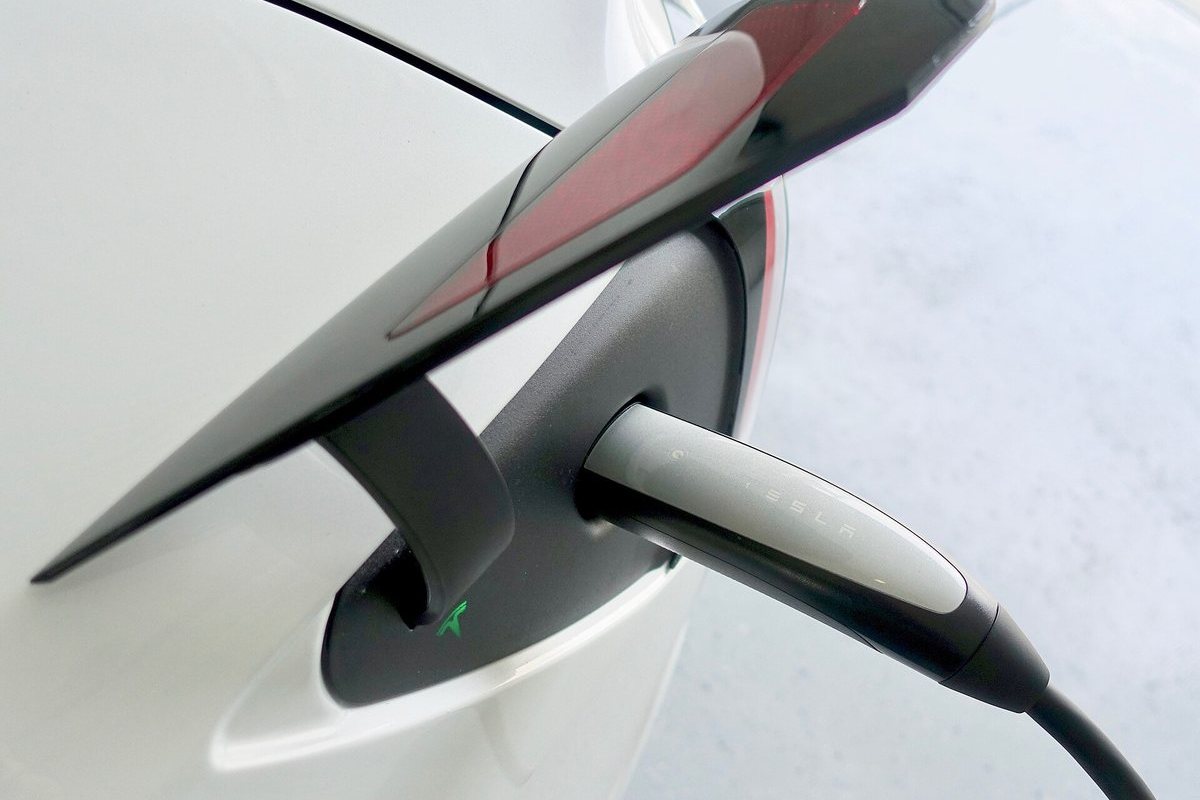
Ask three Tesla owners what charge limit to use and you might get three answers: 80%, 90% or 100%. The reason is simple. Tesla builds cars with two very different battery chemistries, and the right everyday charge limit depends on which one is under your floor. Getting it right matters more in a Canadian winter, when range is already tight and the battery’s own estimate of how much energy is left can drift.
Step one: find out which battery you have
Don’t guess based on the trim name or what a friend’s car does. Tesla tells you directly on the touchscreen. Go to Controls > Software > Additional Vehicle Information. If your car has a lithium iron phosphate pack, it will be listed there as an LFP battery.
LFP packs have been used in many standard-range and rear-wheel-drive Teslas. Long Range and Performance versions have typically used nickel-based cells (often called NCA or NMC). Because Tesla changes suppliers and configurations over time, two cars with the same badge can have different packs, which is why the screen is the only answer that counts. Write it down, since it decides everything below.
If your car has an LFP battery: charge to 100%
Tesla’s owner’s manual is very clear here. If your vehicle has an LFP battery, Tesla recommends that you:
- Keep the charge limit set to 100%, even for daily use.
- Fully charge to 100% at least once per week.
- If the car has been parked for more than a week, drive as you normally would and charge to 100% at your earliest convenience.
Tesla says following this advice maximizes available range and improves the car’s ability to accurately determine its state of charge and estimated range. That second point is the one LFP owners notice in winter: if you never charge to full, the range estimate can become less accurate.
The manual also suggests letting the car “sleep” regularly by parking with Sentry Mode off when possible. You can use the Exclude Home, Exclude Work and Exclude Favorites settings so Sentry Mode doesn’t switch on where you don’t need it.
One trade-off to expect: regenerative braking is reduced when the battery is full. Right after a 100% charge, the car won’t slow down as strongly when you lift off the accelerator. Tesla’s manual points this out alongside its 100% recommendation.
If your car has a nickel-based battery: use the Daily range
The 100% advice in the manual is written specifically for LFP packs. On cars with nickel-based batteries, the charge limit slider marks a recommended “Daily” range, and owner guides based on Tesla’s manual advise keeping everyday charging within it and going to 100% only before a long trip. If you do need a full charge, time it so the car finishes shortly before you leave rather than sitting at 100% for days.
The differences between sensible daily settings, such as 80% versus 90%, are small. What matters more is avoiding long stretches at very high or very low charge.
Rules that apply to every Tesla
- Plug in when you can. Tesla says the most important way to preserve the high voltage battery is to leave the car plugged in when you’re not using it, especially if you won’t drive for several weeks. There is no advantage to waiting until the battery is low before charging.
- Never let it run to 0%. Tesla warns that a fully discharged battery can damage other parts, such as the low voltage battery, and that discharge-related costs are not covered by the warranty or Roadside Assistance.
- Don’t panic about blue on the battery icon. The manual says a blue section means a small part of the stored energy isn’t available because the battery is cold. It goes away once the battery warms up.
- Your limit applies to scheduled charging too. The limit you set on the Charging screen is used for both immediate and scheduled sessions.
What it means for Canadian owners
For Ontario drivers, the cheapest way to follow any of these rules is to charge overnight at home. If you’re on Ontario’s Ultra-Low Overnight rate, an LFP owner can top up to 100% during the cheapest hours and still follow Tesla’s weekly full-charge advice without paying peak prices. Use Scheduled Departure so the car also warms the cabin and battery before you leave; our home charging guide walks through the setup.
Winter also makes accurate range estimates more valuable. Cold weather already cuts range (see our winter range guide), so an LFP car that hasn’t been to 100% in weeks can make a highway trip feel more stressful than it needs to be. Before a long drive, charge to full, then use Set Arrival Energy to keep a buffer at your destination.
Bottom line: check the screen once, then pick the habit that matches your battery. LFP likes 100% and a weekly full charge. Nickel-based packs like the Daily range, with 100% saved for road trips.
Which charge limit do you use, and has it changed your winter range? Share your routine with 18.0K owners in Tesla Model Y & 3 [Ontario, Canada], Canada’s friendliest Tesla Facebook group. Come join us!
On X? Join our community Tesla Model* [Ontario, Canada] too.
Sources
- Tesla Model Y Owner’s Manual (online edition)
- Model Y Owner’s Manual text: Charge Settings
- Model Y Owner’s Manual text: Lithium Iron Phosphate Batteries
- Model Y Owner’s Manual text: About the High Voltage Battery
- Model Y Owner’s Manual text: Battery Care
- Tesla Chargers: How to look after your Tesla battery