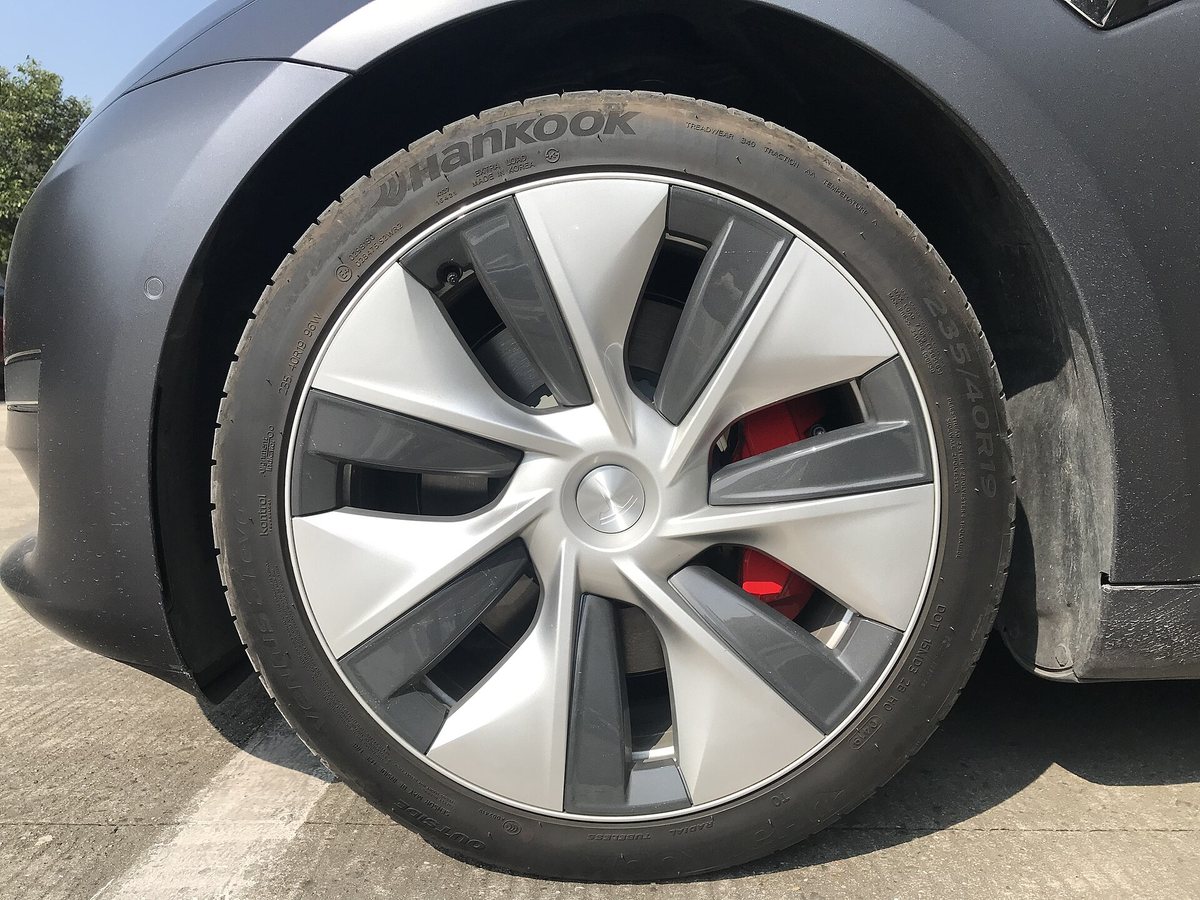
Ontario roads get a heavy coat of salt every winter, and that salt is hard on brakes. Tesla owners have an extra wrinkle: because regenerative braking does most of the slowing, the friction brakes on a Model 3 or Model Y can go weeks without doing much work. That sounds like a good thing, and for pad wear it is. But it also means rust and grime can build up quietly on parts that rarely get hot enough to clean themselves.
Here is what Tesla actually recommends for cars driven where roads are salted, and how to fit it into a Canadian winter routine.
Why regen makes salt a bigger issue
Tesla explains this in a technical note it publishes for service shops (TN-19-33-004). Electric vehicles rely heavily on regenerative braking, so in light driving their friction brakes are used less and produce less heat than in a gas car. As a result, it can take longer for the brakes to dry off moisture. In regions where roads are salted in winter, Tesla says prolonged exposure to salt and mud corrodes brake components and speeds up wear.
The owner’s manual adds another cold-weather detail: regenerative braking may be limited when the battery is cold or already full. So on a frosty morning the car may lean on the friction brakes more than usual, right when those brakes are coated in slush.
What the maintenance schedule says
Tesla says its cars should generally be serviced on an as-needed basis, but the current Model Y owner’s manual lists a few recommended intervals. The one that matters most here:
- Clean and lubricate the brake calipers every year or every 20,000 km if you drive in an area where roads are salted during winter.
- Brake fluid health check every 2 years, replacing it if necessary (or replacing it every 2 years if the car is used for towing).
- Rotate tires every 10,000 km, or sooner if the tread depth difference reaches 1.5 mm.
Intervals can differ between models and model years, so check the Maintenance section of the manual for your own car on the touchscreen or on Tesla’s website. Tesla also notes that its list is not complete and does not cover wear items such as brake pads and wipers.
A simple salt-season routine
Tesla’s technical note gives a practical habit you can use all winter. After driving in wet, muddy or salty conditions, wash the car of dirt and salt, paying special attention to the wheel, brake, suspension and underbody areas. Then take a cautious short drive with several firm brake pedal applications to dry the pads and rotors.
In practice, for a GTA or Ottawa winter, that could look like this:
- Use a car wash with an underbody rinse during milder spells, when water won’t instantly freeze.
- Afterwards, on a quiet road or empty lot, press the brake pedal firmly a few times from moderate speed. Do this only where it is safe and legal, with no one close behind you.
- Keep an eye and an ear out for grinding, squealing, a pulsing pedal or uneven stopping. Book service if anything changes.
One setting is worth knowing about. Under Controls > Pedals & Steering, you can turn on Apply Brakes When Regenerative Braking is Limited. The manual says this makes the regular brakes engage automatically when regen is limited, so the car slows the same way every time you lift off. Tesla notes the brake pedal may move and feel stiffer when this happens, and that it is expected.
Booking the caliper service
You can book through Schedule Service in the Tesla app. Tesla’s manual suggests adding as much detail as possible, such as photos, sounds, the conditions and when the issue happened. If you are simply due for the yearly salt-region caliper cleaning, say so in the request and mention your mileage.
Tesla wrote its technical note for third-party service facilities as a courtesy, so an independent shop can follow Tesla’s procedure. Keep in mind the manual’s warning, though: damage or failures caused by maintenance or repairs done by non-Tesla-certified technicians are not covered by the warranty. If your car is still under warranty, or you have bought an extended service agreement, it is worth asking Tesla first.
The technical note covers Model 3 and Model Y with the standard (non-performance) brakes. Tesla has a separate note for cars with performance brakes, so mention your trim when you book.
What it means for Canadian owners
If you drive in Ontario, Quebec or any province that salts its roads, treat the yearly caliper cleaning and lubrication as part of your winter prep, the same way you treat the switch to winter tires. A good time to book is spring, after the last salt of the season, when shops are less busy and the year’s grime can be cleaned off. Pair it with a tire rotation if you are close to 10,000 km, and read our guide to Tesla’s tire wear and alignment alerts while you’re at it.
The big takeaway: low brake pad wear on an EV is not the same as no brake maintenance. Corroded brake parts are exactly what Tesla’s salt-region interval is meant to prevent, and a few minutes of washing plus a yearly service go a long way. Our winter driving guide covers the rest of the cold-weather checklist.
How do your brakes hold up after an Ontario winter? Share your service tips with 18.0K owners in our Facebook group, Tesla Model Y & 3 [Ontario, Canada], where local owners compare notes every day. Come join us!
On X? Join our community Tesla Model* [Ontario, Canada] too.