Your Tesla keeps an eye on your tires and steering with sensors it already has. There is no tread gauge in the wheel. Instead, the car’s software watches how fast each axle’s wheels turn and where the steering sits, and it can put up two different service alerts on the touchscreen. Owner Nic Cruz Patane recently shared both alerts from his car, which is a good excuse to explain what they mean and what to do about them, especially with winter tire season here.
The two alerts
The tire alert reads: “Uneven tire wear – Rear tire tread depth too low. Schedule service for tire inspection and rotation,” as Not a Tesla App recorded when the feature first appeared. It isn’t new. It arrived quietly with software update 2021.44.5 in December 2021, according to Not a Tesla App and Drive Tesla Canada.
The alignment alert reads “Steering alignment service recommended”, with the line “OK to drive – Schedule service soon” underneath. Its internal code is DI_a179, according to the Tesware alert reference, which catalogues Tesla’s service alerts.
How the car knows your tires are worn
As a tire wears, its diameter shrinks slightly. A smaller tire has to turn a little faster to cover the same distance, as Drive Tesla Canada explained when the feature launched. Tesla has described the method itself: the car calculates a long-term average difference between front and rear axle wheel speeds, uses it to model the difference in tread depth between the axles, and alerts you if it estimates significantly less tread on the rear than the front. Torque News reported that explanation from Tesla in April 2023.
Two things follow from that. First, the alert is based on how your tires are actually wearing, not on how many kilometres you’ve driven. Second, it compares one axle against the other. It is an estimate, not a measurement, so it doesn’t replace a tread-depth check at the shop.
How the alignment alert works
According to the Tesware reference, DI_a179 sets when the car’s drive interface computer detects a steering angle offset that is approaching a plausibility threshold. If the offset keeps growing and passes that threshold, stability control and traction control become unavailable. The alert clears once the car has an alignment done at a service centre. So “OK to drive” is true today, but it isn’t a message to ignore for months.
What Tesla’s manual says about rotation and alignment
The alerts sit on top of Tesla’s normal maintenance advice. In its owner’s manual, Tesla recommends rotating the tires every 10,000 km, or sooner if the tread depth difference reaches 1.5 mm (2/32 in.) since the last rotation, whichever comes first. Aggressive driving can mean more frequent service. Cars with staggered wheels can only be rotated side to side, because the front and rear tire sizes differ.
The manual also says to schedule a wheel alignment if you notice wear on one side of a tire, or if the car pulls left or right with the steering wheel held straight, and recommends an alignment after installing a new set of tires. After tires are rotated or replaced, it asks you to reset the tire configuration on the touchscreen.
What it means for Canadian owners
Use your seasonal swap. If you switch to winter tires each fall, that visit is the easiest time to measure tread on all four tires, rotate within each set, and ask whether an alignment is worth doing. If you’re putting on a brand-new set, Tesla’s manual recommends an alignment anyway. Our winter tire guide covers choosing a set.
Mind the winter tread limit. Tesla’s manual says tires with less than 4 mm (5/32 in.) of tread don’t perform well in snow and slush and shouldn’t be used in winter conditions, and that below 3 mm (4/32 in.) they’re more likely to hydroplane in the wet. It also says to put the tires with the most tread on the rear. A “rear tread depth too low” alert in November is a strong hint to measure before the first storm.
Potholes and alignment. Spring pothole season is hard on suspensions. If your steering wheel sits off-centre or the car starts to pull after a big hit, the manual’s advice applies: book an alignment rather than waiting for the alert. For more cold-weather tips, see our Tesla winter driving guide.
Who pays. Tesla’s New Vehicle Limited Warranty for Canada excludes maintenance services, including wheel alignment and balancing, and it excludes tires, which carry their own manufacturer warranties. Rotations, alignments and seasonal swaps are on you. The warranty also says you can have non-warranty service done by a provider other than Tesla and keep your warranty, though Tesla may exclude coverage for problems caused by that work. You can book tire service through the Tesla app or use a tire shop you trust. Either way, reset the tire configuration afterwards.
Have you seen either alert on your car? Share your experience with 18.0K owners in Tesla Model Y & 3 [Ontario, Canada], Canada’s most active Tesla Facebook group.
We’re also on X: join our community Tesla Model* [Ontario, Canada].
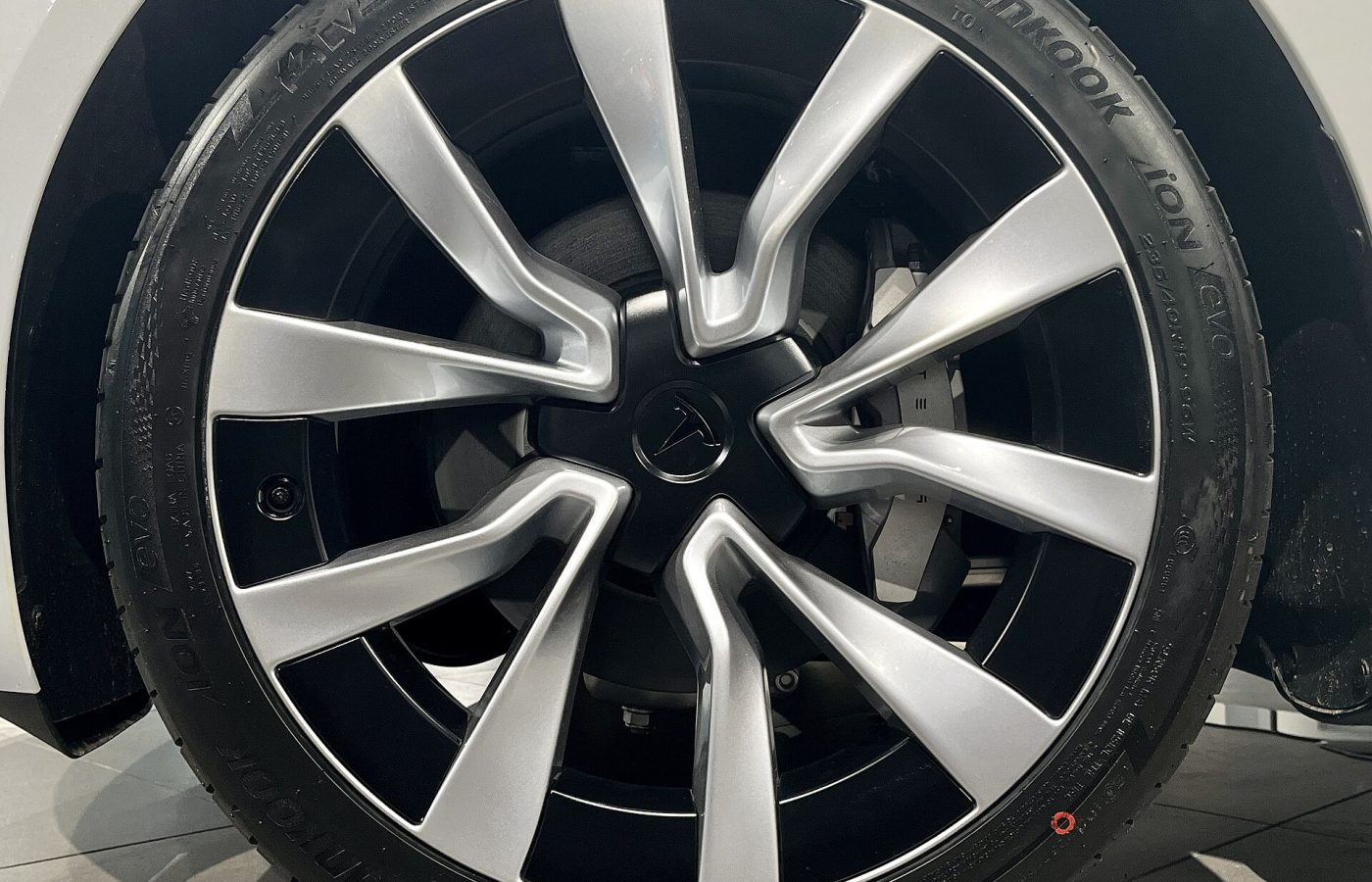
Featured image: Tesla Model 3 19-inch wheel. Photo: Kazyakuruma via Wikimedia Commons (CC0).
Sources
- Tesla Model Y Owner’s Manual: Tire Care and Maintenance
- Tesla New Vehicle Limited Warranty (Canada)
- Torque News: Tesla Will Notify You When Your Tire Tread Depth Is Low
- Not a Tesla App: Teslas can now detect uneven tire wear
- Drive Tesla Canada: Your Tesla can now detect your tire wear and tread depth
- Tesware: DI_a179 Steering Angle Offset Warning