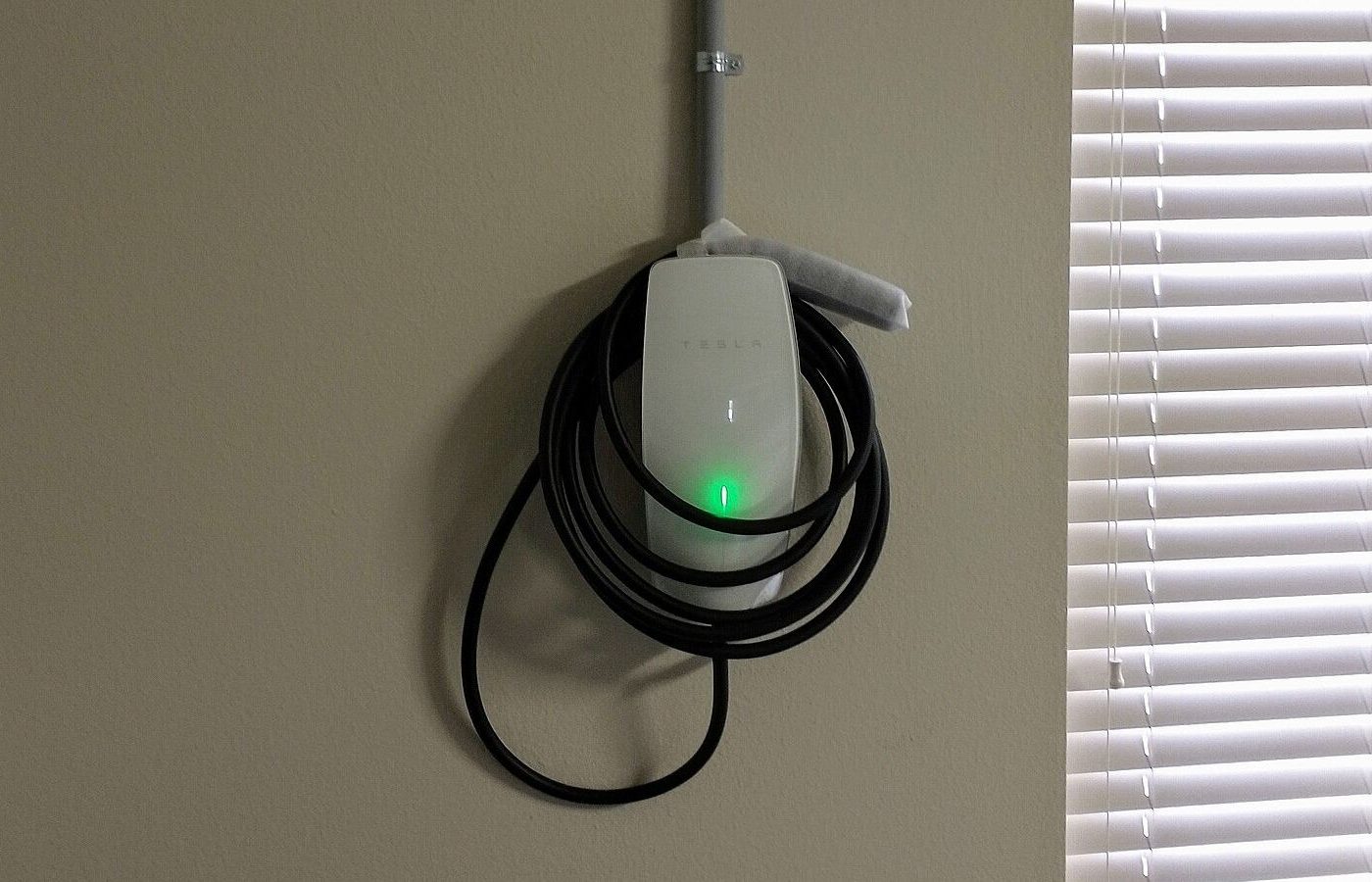
For most Ontario owners, the best way to charge a Tesla at home is a Level 2 (240-volt) charger on its own circuit. Have a Licensed Electrical Contractor install it with an ESA permit, then put your home on the Ultra-Low Overnight plan so the car charges between 11 p.m. and 7 a.m. From November 1, 2026, that rate drops to 3.7¢/kWh. This guide to Tesla home charging in Ontario covers equipment, permits, scheduling, condo rules and the rebates that actually exist right now.
Tesla home charging in Ontario: Level 1 vs. Level 2
Level 1 is a regular 120-volt household outlet. Ontario’s government says it adds roughly 5 to 8 km of range per hour. That can work if you drive very little, but a long winter commute can outpace it.
Level 2 uses a 240-volt circuit, like a stove or dryer. This is what most owners install, and it refills a typical day’s driving overnight with time to spare. Your two main options:
- Tesla Wall Connector: up to 48 amps (11.5 kW) on a 60-amp breaker. Tesla’s Canadian shop says that’s up to 71 km of range per hour. It also works on smaller breakers at lower power, for example 32 amps (7.7 kW) on a 40-amp breaker.
- Mobile Connector + NEMA 14-50 outlet: Tesla’s Mobile Connector with the 14-50 adapter on a 50-amp breaker gives a maximum of 32 amps (7.7 kW).
One detail that saves money: Tesla says the Model 3 Rear-Wheel Drive, Model Y Rear-Wheel Drive and Model Y All-Wheel Drive charge at a maximum of 32 amps (7.7 kW) on AC. If that’s your car, a 48-amp install won’t charge it any faster. To check your car’s maximum, tap the lightning bolt icon on the touchscreen and look at the amps it can draw. Ask your electrician to size the circuit for your car and your panel.
Wall Connector or a 240-volt outlet?
- Wall Connector: hardwired, Wi-Fi connected, schedulable from the Tesla app, rated for indoor or outdoor mounting, with a 7.3 m cable and a four-year residential warranty. Its Power Management features help electricians fit it to most home electrical systems. Tesla’s Canadian shop lists it at $815 (it showed as out of stock and limited to Tesla owners when we checked on October 20, 2026).
- NEMA 14-50 outlet: uses the Mobile Connector you may already have, and the outlet can serve other EVs later. Charging tops out at 32 amps. If the car lives outside, ESA’s guidance is to use equipment rated for outdoor use.
Either way, ESA says EV charging equipment must carry a recognized Canadian certification mark, such as CSA, cUL or cETL. Skip uncertified chargers from online marketplaces.
Ontario rules: ESA permit and a licensed electrician
This is the part people skip, and it matters for safety, insurance and resale.
- ESA permit (notification of work): the Electrical Safety Authority says all EV charger installations need an electrical permit filed before work starts. It’s separate from a municipal building permit.
- Licensed Electrical Contractor (LEC): in Ontario, if you hire someone for electrical work in your home, by law they must be an LEC. You can look one up with ESA’s contractor search. Friends and relatives aren’t allowed to do it for you.
- DIY: homeowners can legally do their own electrical work, but they must file the notification themselves and get it reviewed. Installations must meet the Ontario Electrical Safety Code, including Section 86 for EV charging. For most owners, an LEC is the safer choice.
- Certificate of Acceptance: once the work passes, ESA issues one. Ask your contractor for copies of the permit and the certificate, because your home insurer and a future buyer may ask for them.
Is your electrical panel big enough?
EV charging is a big continuous load. Your electrician will do a load calculation on your panel and service. If capacity is tight, there are usually alternatives to an expensive service upgrade. The Wall Connector can be installed on a smaller breaker. The Ontario Electrical Safety Code also allows an EV energy management system (EVEMS), which watches your home’s total load and throttles the charger when needed. ESA’s EV bulletin explains how EVEMS loads are handled under the Code’s Rule 8-106. Ask your LEC which option fits your home.
Switch to Ultra-Low Overnight and schedule your charging
Since November 2023, Ontario utilities have had to offer the Ultra-Low Overnight (ULO) plan to Regulated Price Plan customers with a smart meter. Here are the Ontario Energy Board prices taking effect November 1, 2026, from our Ontario ultra-low overnight rate story:
- Ultra-Low Overnight (every day, 11 p.m. to 7 a.m.): 3.7¢/kWh
- Weekend Off-Peak (weekends and holidays, 7 a.m. to 11 p.m.): 9.1¢/kWh
- Mid-Peak (weekdays, 7 a.m. to 4 p.m. and 9 p.m. to 11 p.m.): 14.6¢/kWh
- On-Peak (weekdays, 4 p.m. to 9 p.m.): 37.7¢/kWh
Adding 60 kWh overnight on ULO costs about $2.22 on the electricity line. Plug in at 5 p.m. on a weekday and the same 60 kWh is about $22.62. Delivery, regulatory charges and HST are extra in both cases. ULO only pays off if most of your household’s big usage can move overnight, so run your own numbers with the OEB’s bill calculator before switching.
How to set scheduled charging in your Tesla
- Park at home and tap Controls > Schedule (also on the charging and climate screens, or in the Tesla app).
- Choose your Home location so the schedule only applies there.
- Under Charge, set a start time of 11:00 p.m., or an “end by” time before 7:00 a.m. Turn on Repeat Weekly so it doesn’t run just once.
- Under Precondition, set your usual departure time so the cabin and battery are warm when you leave.
- Set your charge limit to the level recommended on your car’s charging screen.
Tesla’s manual notes a few cases where a scheduled charge starts right away when you plug in. One is when there isn’t enough time left to reach your limit by your “end by” time. If you see charging start at dinnertime, check your schedule. If your Wall Connector has its own schedule in the Tesla app, keep it matched to the car’s schedule.
Condo and apartment charging in Ontario
Ontario condo owners have a legal path to install a charger. Under the Condominium Act’s general regulation (O. Reg. 48/01), as summarized by the Condominium Authority of Ontario:
- Apply in writing. The application must be signed, identify you and your address for service, and include drawings, specifications and details of the proposed installation. The corporation must help you meet these requirements.
- 60-day decision. The board must respond in writing within 60 days, unless you both agree to a different timeline. It can only refuse based on a qualified professional’s opinion that the installation would break the law, affect the building’s structure, or create a health and safety risk. It must give you a copy of that report. Otherwise, it must approve or propose a reasonable alternative.
- 90-day agreement. You and the corporation then have 90 days to sign a written agreement covering costs. It’s registered on your unit’s title. Unless the agreement says otherwise, the owner generally pays for the installation.
Before you apply, ask management whether the building already has EV-ready conduit, a load management system or a shared charging provider. That can make your install much cheaper. Renters have no equivalent legal process. Get your landlord’s written permission before any electrical work, and ask whether a Level 1 outlet at your parking spot is an option.
Rebates and incentives that actually exist (October 2026)
There’s a lot of outdated rebate information online. Here’s what we could verify on October 20, 2026:
- No Ontario home-charger rebate. The province’s EV charging page lists installation steps and public charging programs, but no residential charger rebate.
- No federal home-charger rebate. The federal Zero Emission Vehicle Infrastructure Program funds organizations (multi-unit buildings, workplaces, public sites), not individual homeowners. NRCan lists all of its streams as closed for applications, and the program runs to March 31, 2027.
- Federal EV purchase rebate (for the car, not the charger). The Electric Vehicle Affordability Program offers up to $5,000 in 2026 at the point of sale on eligible EVs. See how the Model Y did in our EVAP rebate breakdown.
- City of Toronto HELP loan. The Home Energy Loan Program lists Level 2 EV charging stations as eligible. It’s a low-interest loan repaid through your property tax bill, not a rebate. Rates are fixed (for example, 3.95% over 5 years until December 31, 2026) plus a 2% admin charge. It’s open to Toronto houses and low-rise buildings of up to three storeys and six units, and projects that aren’t heat-pump-only or solar-only need an EnerGuide home energy assessment.
- Hydro One myEnergy Rewards (EV stream). Hydro One customers can enrol an eligible EV through the Optiwatt app and let Hydro One adjust charging during grid events and managed-charging sessions. Enrolment earns a one-time $50 gift card, plus $50 a year if you don’t opt out of more than half of the sessions. Enrolment of Level 2 chargers is closed. Only the vehicle option is open.
Other utility offers change often. Check your own utility’s website (for example Alectra, Toronto Hydro or Elexicon) before you buy, and be wary of anyone promising a “government charger rebate” that you can’t find on an official site.
What to budget
Installation cost depends mostly on how far the charger is from your panel, whether the panel has room, and whether you need trenching or an outdoor run. We haven’t seen a reliable Ontario-wide average, so get two or three written quotes from LECs. Make sure each quote includes the ESA permit, the breaker size and the exact equipment. Add the charger itself: $815 for a Wall Connector at Tesla’s listed Canadian price, or the cost of a NEMA 14-50 outlet if you already own a Mobile Connector.
Winter tips for home charging
- Plug in every night in winter. Tesla says the car then uses wall power, not the battery, to keep the battery warm.
- Pair your overnight charge with a Precondition time so you leave with a warm battery and full regen.
- Keep the cable off the floor and out of snowbanks and puddles. ESA’s homeowner fact sheet recommends keeping it off the floor.
- More cold-weather advice is in our Tesla winter driving and range guide for Ontario.
Frequently asked questions
Do I need an ESA permit to install a Tesla charger in Ontario?
Yes. ESA says all EV charger installations need an electrical permit (notification of work) filed before work starts. A Licensed Electrical Contractor normally files it and gives you the Certificate of Acceptance when the job passes.
Is there a rebate for home EV chargers in Ontario in 2026?
Not a provincial or federal one. Toronto homeowners can finance a Level 2 charger through the City’s HELP loan, and Hydro One customers can earn small rewards by enrolling an eligible EV in managed charging. Check your local utility too.
What’s the cheapest time to charge a Tesla in Ontario?
On the Ultra-Low Overnight plan, it’s 11 p.m. to 7 a.m. every day. That’s 3.7¢/kWh for the electricity portion from November 1, 2026, before delivery, regulatory charges and HST.
Do I need a 60-amp circuit for a Wall Connector?
Only if your car can actually use 48 amps. Model 3 RWD, Model Y RWD and Model Y AWD max out at 32 amps on AC, which a 40-amp circuit supports. Your electrician will size it for your car and panel.
Can my condo board refuse my EV charger?
Only on limited grounds. Under O. Reg. 48/01, it must respond within 60 days, and it can refuse only based on a qualified professional’s report showing a legal, structural or health and safety problem. It must share that report with you.
Ask the community
Wondering which electrician other owners in your area used, or what they paid? Ask the 17,000+ Ontario owners in Tesla Model Y & 3 [Ontario, Canada]. It’s one of the friendliest places to talk Tesla in Canada, and plenty of members have been through the same install.
You can also find us on X in the Tesla Model* [Ontario, Canada] community.
Sources: ESA: Electric vehicles & charging systems · ESA: DIY electrical work · ESA Bulletin 86-1: EV charging systems · Ontario.ca: Charging electric vehicles · Tesla: Wall Connector · Tesla: Mobile Connector · Tesla Shop Canada: Wall Connector · Tesla: Scheduled Precondition and Charge · OEB: November 1, 2026 prices · Condominium Authority of Ontario: EV charging systems · NRCan: ZEVIP · Hydro One: myEnergy Rewards EV procedures
Photo: “Tesla Wall Connector” by Whoisjohngalt, Wikimedia Commons, CC BY-SA 4.0. Cropped.

About the author: Sivachandran Bharathi is a Lead Software Engineer based in Markham, Ontario, with 10+ years of experience building enterprise systems for banks and financial institutions worldwide, and a Master of Applied Science in Computer Engineering with research in machine learning. Connect on LinkedIn.