The first real cold snap of the season brings a familiar sight to a lot of Ontario driveways: a tire pressure warning on the Tesla’s screen. Usually nothing is wrong with the tires. The air inside them has simply cooled and contracted. But under-inflated tires hurt range, grip and tire life, so it’s worth knowing how to handle the warning properly, especially during the fall swap to winter tires.
Why the warning shows up when it gets cold
Tesla’s owner’s manual is direct about this: tire pressures drop in cold temperatures. Tesla’s rule of thumb is that tires lose about 1 PSI for every 6 °C drop in outside temperature (1 PSI per 10 °F). If you set your pressures on a mild September afternoon, a -10 °C morning in December can leave them several PSI low.
The manual says that if the tire pressure light comes on in cold weather, you should inflate the tires before driving. Tesla adds that proper pressures help protect tires from potholes and improve range, two things Ontario drivers care about in winter.
What pressure should you use?
Use the pressure on the Tire and Loading Information label on the driver’s door pillar, visible when the front door is open. Tesla says to use that number even if it differs from the pressure printed on the tire’s sidewall, which is a different number. The touchscreen also shows your car’s recommended cold pressures under Controls > Service, along with the current reading for each tire and when it was last measured. You can switch between PSI and bar under Controls > Display > Tire Pressure.
If you’re running winter tires in a different size from the one on the label, Tesla says it’s your responsibility to determine the correct pressure for those tires. Ask the tire shop and get the number in writing.
How to check pressure the right way
Tesla’s manual gives a clear method. Check when the tires are cold and the car has been parked for more than three hours:
- Find the target pressure on the door pillar label.
- Remove the valve cap.
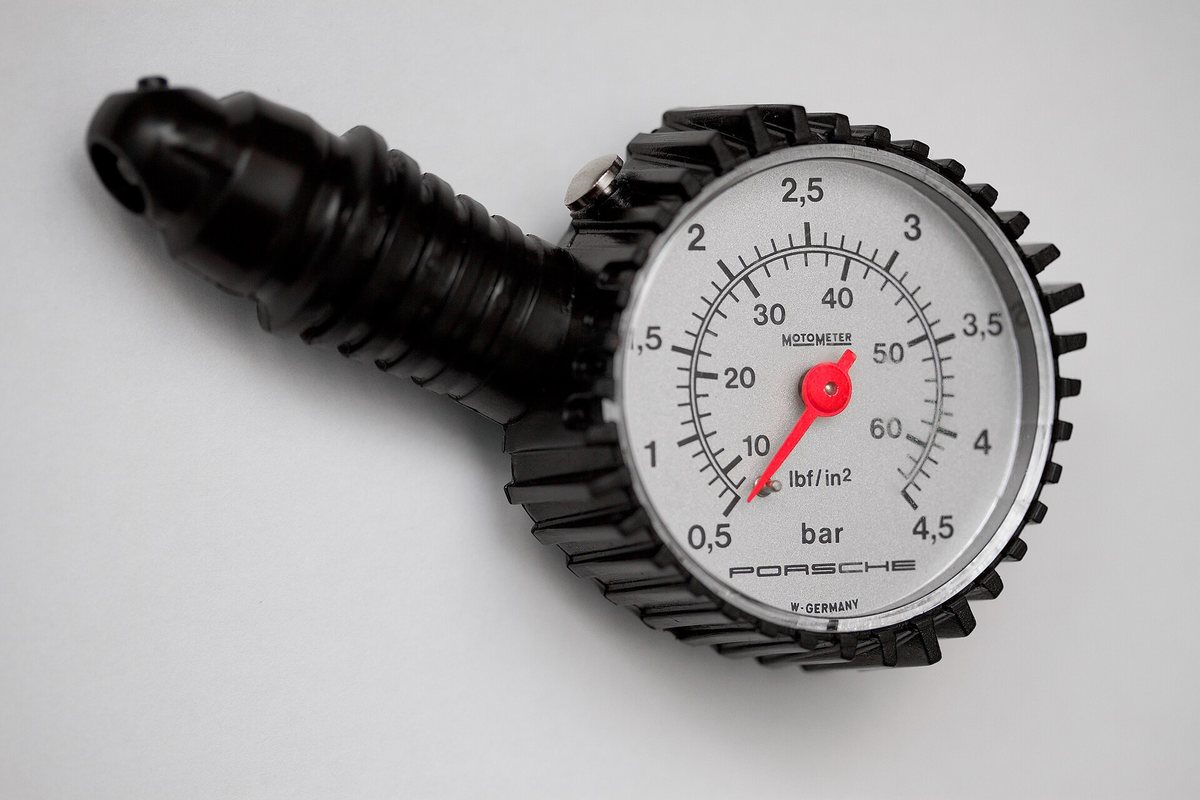
- Press an accurate tire gauge firmly onto the valve to read the pressure.
- Add or release air as needed. You can let air out by pressing the metal pin in the centre of the valve.
- Re-check with the gauge and repeat until it’s correct.
- Put the valve cap back on to keep dirt out.
Tesla warns that just 1.6 km of driving warms the tires enough to change the reading, and that parking in direct sun affects it too. Most importantly, never let air out of warm tires to match the cold pressure. Tesla says a hot tire at or below the recommended cold pressure is dangerously under-inflated.
The manual recommends checking each tire monthly when cold, and doesn’t treat the warning system as a substitute. It’s still the driver’s job to keep pressures correct even if the light hasn’t come on.
Why the light doesn’t go off right away
After you add air, the warning won’t disappear immediately. Tesla says you need to drive above 25 km/h for a short time so the tire pressure monitoring system (TPMS) can update and turn off the light.
If the light flashes for about a minute every time you start the car and then stays on, that’s different. The manual says this means the system has detected a fault, and it may not be able to warn you about low pressure until it’s fixed.
Swapping to winter wheels
Many Ontario owners keep a second set of wheels for winter (see our winter tire guide). Here’s what Tesla says about the sensors:
- After you replace one or more wheels, the TPMS sensors relearn automatically within about two minutes of driving above 25 km/h.
- If a non-Tesla shop repairs or replaces a tire, the sensor may not work until Tesla completes its setup procedure.
- Accessories not approved by Tesla, and replacement wheels or tires that block the sensors, can interfere with the system. Always check for the malfunction warning after a wheel or tire change.
- If a tire was repaired with a different sealant than Tesla’s and low pressure shows up, the sensor may have been damaged.
Check the tread too
Pressure is only half the story. The manual says tires with less than 4 mm of tread don’t perform well in snow and slush and shouldn’t be used in winter conditions, while tires below 3 mm are more likely to hydroplane in the wet. A cheap tread depth gauge is worth keeping with your tire gauge. Our guide to Tesla’s tire wear and alignment alerts explains what the car can tell you on its own.
What it means for Canadian owners
Expect the tire light at least once each fall, and treat it as a reminder rather than an emergency. Keep a good gauge in the car, check pressures in the morning before driving, and top up to the door pillar number. If you just switched to winter wheels, give the sensors a short drive to relearn, and book a visit if the light flashes at start-up. The payoff is better grip, better range and longer tire life all winter. For more cold-weather range tips, see our winter driving guide.
What pressures do you run on your winter set? Compare notes with 18.0K owners in Tesla Model Y & 3 [Ontario, Canada]. Come join us!
On X? Join our community Tesla Model* [Ontario, Canada] too.