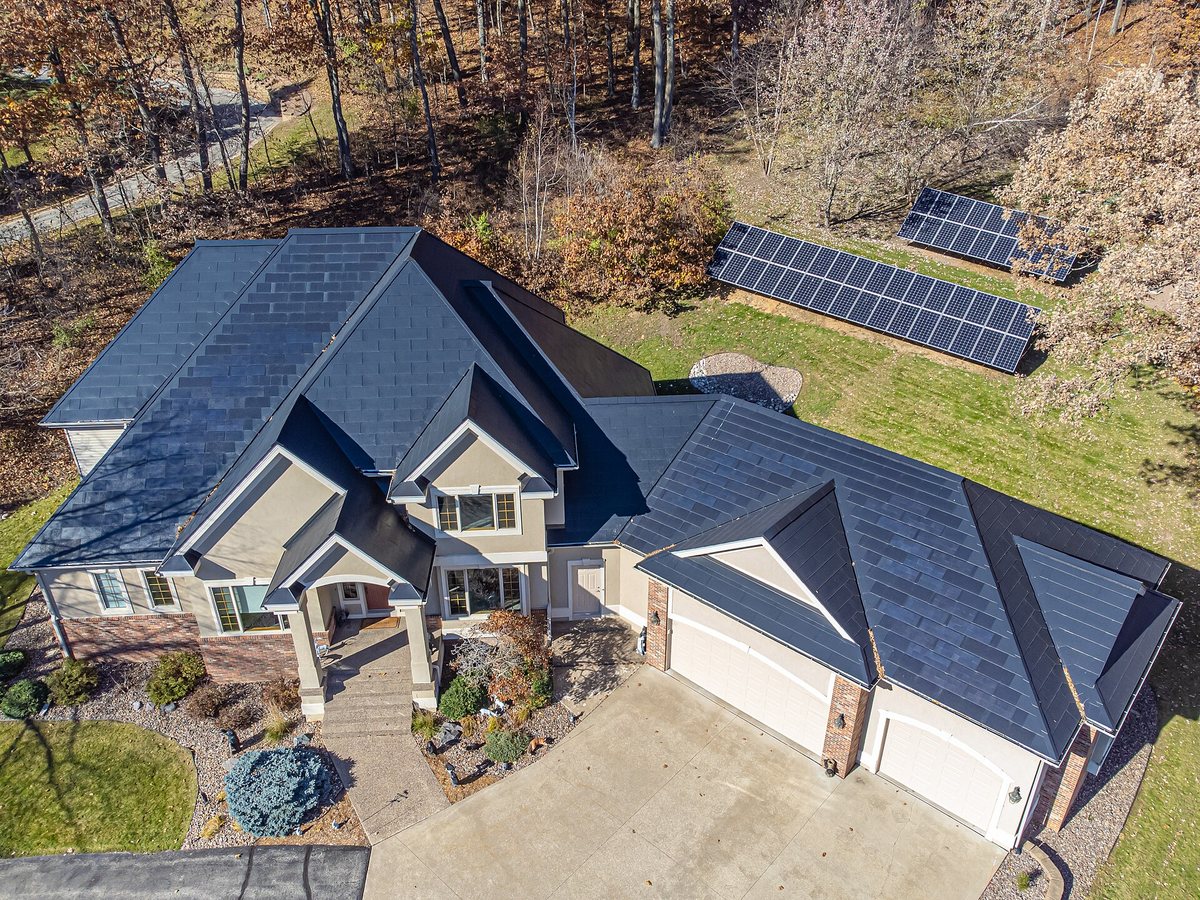
A California judge has ruled that Tesla is liable for fraud in a long-running lawsuit over a Solar Roof installation that was never finished. The ruling came as a sanction after Tesla repeatedly failed to hand over evidence, and it means a jury will now only decide how much Tesla owes on those claims. Tesla is fighting the decision and has asked an appeals court to step in.
The case is a U.S. story, but it’s a useful warning for any homeowner in Canada thinking about solar, batteries or a big-ticket home energy project.
The case: Conroy v. Tesla
Electrek reviewed the court orders, the complaint and the parties’ joint trial readiness report in Conroy v. Tesla, filed in 2022 in San Diego Superior Court’s North County division. Homeowner Ambrose Conroy of Rancho Santa Fe signed up for a Tesla Solar Roof in March 2020. The original contract was US$82,210 for a 13.1 kW system. By February 2021, after two amendments, it had grown to about US$110,000 for an 18.2 kW roof and six Powerwalls.
According to Electrek, the roof was never finished, never passed a county inspection and never produced a single kilowatt-hour for the house. In the joint report filed last month, Tesla stipulated to liability on three of the five claims: breach of contract, breach of warranty and negligence. The homeowner says fixing the damage will cost “well over $2.5 million.” Electrek reports Tesla offered US$5,000 to settle in April 2022.
How it got to a fraud ruling
The remaining two claims, fraud and negligent misrepresentation, are where the case turned against Tesla. Electrek reports that Judge Cynthia Freeland sanctioned Tesla twice over discovery, ordering it to pay US$15,467.50 in February and US$13,500 in June for failing to produce a proper privilege log and responsive documents. Both times, she warned that issue sanctions could follow.
When Tesla missed the next deadline, the court on September 11 deemed Tesla liable for fraud and negligent misrepresentation, limiting the trial on those claims to compensatory and punitive damages. The judge found “ample evidence to support that Defendants have acted willfully.” Among the missing records, Electrek says, were Microsoft Teams messages, OSHA logs, emails with San Diego County inspectors and more than 20 internal quality, installation and safety reports.
Tesla asked the judge to reconsider, saying it had since produced everything. In an October 27 ruling, she declined, writing that the late documents could support Conroy’s theory that Tesla “knowingly used Plaintiff’s home as an experiment while knowing they lacked the experience to perform as promised.” Electrek notes that the “experiment” wording also appears in how Conroy’s side describes internal Tesla text messages on the exhibit list, though Electrek has not seen those texts itself.
What happens next
In an October 29 filing, Tesla asked the court to pause the case while it petitions the California Court of Appeal. Tesla argues the sanction is “unduly punitive,” violates due process and amounts to a directed verdict on fraud before trial, and says the discovery dispute had nothing to do with the fraud claims. According to Electrek, the November 20 trial date is off, and a trial readiness conference is set for December 4.
Electrek also reports that Tesla installed only about 3,000 Solar Roofs before ending the product this year, and that the complaint cites a 2025 California Contractors State License Board action seeking to revoke Tesla’s contractor licences over abandoned Solar Roof jobs. None of the allegations about the installation itself have been tested at trial, apart from the claims Tesla has now admitted.
What it means for Canadian homeowners
Most Canadian Tesla owners will never deal with a Solar Roof, but many are looking at rooftop solar, a Powerwall or a home charger. This case is a reminder to protect yourself on any large home energy project:
- Get everything in writing, including the scope, the schedule, the permits and who is responsible for inspections.
- Tie payments to milestones such as passed inspections and a working system, not just installation dates.
- Keep your own records: photos, emails, inspection reports and every change to the contract.
- Use licensed local trades. In Ontario, electrical work such as an EV charger installation needs a licensed electrical contractor and an ESA permit, as our home charging guide explains.
If you’re in Ontario, check the Home Renovation Savings Program before you sign anything. It offers up to $5,000 for rooftop solar and up to $5,000 for battery storage paired with a new solar system, but homes that take those rebates can’t also sign a net-metering agreement with their utility. The program asks your contractor to submit a pre-installation form, so pick an installer who knows the rules.
And if you already have a Powerwall, Tesla’s home energy software is still evolving. Our story on Powerwall Smart Charging for any EV covers the latest update.
Have you installed solar or a Powerwall in Ontario? Share what you learned with 18.0K owners in Tesla Model Y & 3 [Ontario, Canada]. Come join us!
On X? Join our community Tesla Model* [Ontario, Canada] too.