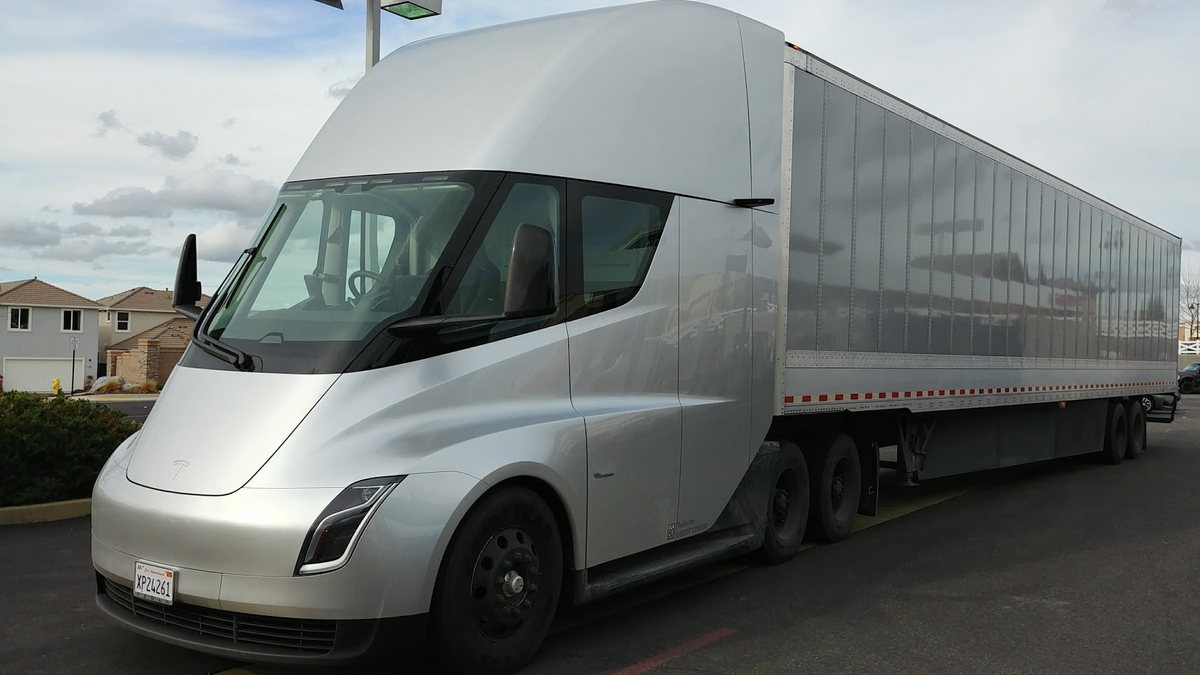
The Tesla Semi is finally moving from pilot builds to a real production program, and its support network is starting to grow. Tesla has scheduled the opening of a Semi Service Center in Laredo, Texas, for Thursday, November 12, a few weeks after confirming in its third-quarter update that volume production of the electric truck is under way in Nevada. For Canadian fleets, the first deliveries are now on the calendar, too.
Volume production in Nevada
Tesla confirmed in its Q3 2026 update on October 21 that it has begun volume production of the Semi at its Nevada factory. The company’s capacity table lists installed annual capacity of 25,000 Semis there. FreightWaves noted that the capacity figure doesn’t necessarily reflect current output, and Tesla didn’t say how many trucks it built or delivered in the quarter.
The 25,000 figure is what Tesla has installed so far. TeslaNorth pointed out that the Nevada plant was designed for 50,000 trucks a year, so the two numbers measure different things.
On the earnings call, Elon Musk said the top version “can go 500 miles at a full 82,000 lbs gross combination weight while achieving an efficiency of 1.7 kWh/mile,” according to FreightWaves. Tesla says that lets the Semi use a third of the energy of a comparable diesel truck to haul the same load. Tesla also said it deployed its first pre-assembled Megacharger to support the ramp.
A new service centre in Laredo
TeslaNorth reports that Tesla’s official event listing puts the Laredo Semi Service Center at 13505 Regional Drive, with an invite-only opening from 4 p.m. to 7 p.m. on November 12. Guests can tour the site, take a ride-along in a Semi and meet the service team. The listing doesn’t give the number of service bays, regular hours or a separate start date for customer service.
Laredo is one of the busiest freight crossings between the U.S. and Mexico, which makes it a logical spot for heavy-truck support. Charging is expanding as well: at the Port of Long Beach, Forum Mobility opened two V4 Megawatt Charging Standard stalls on November 5, with a customer’s production Semi taking the first charging sessions, TeslaNorth reported.
Tesla is also looking overseas. FreightWaves said Tesla is targeting its first European Semi customer deliveries by the end of 2027, with demonstrations planned for the first half of that year, using trucks built in Nevada.
Where Canada fits
Tesla’s Canadian Semi page lists the truck’s specs in metric, according to TeslaNorth:
- Standard Range: up to 500 km
- Long Range: up to 750 km
- Estimated energy use of 1.1 kWh/km for both, with up to 800 kW of drive power and a 40-tonne gross combination weight
- Megacharging at up to 1.2 MW, adding up to 60% of range in 30 minutes, and a 120 kW Basecharger for depots
Tesla says the range estimate assumes a 40-tonne load at 90 km/h and 20 °C on flat ground. Canadian winters are a different test, and real-world winter range for Canadian fleets hasn’t been published yet.
The first confirmed Canadian fleet deal is in British Columbia. R.R. Plett Trucking told Electric Autonomy, as reported by TeslaNorth, that it is installing Canada’s first Tesla Megachargers at its sites in Langley and Kamloops, ahead of 12 Semis it expects in June 2027. Plett placed its deposits when the Semi was unveiled in 2017. The company says faster charging will let it double-shift its electric trucks, and it hopes to build a charging corridor between Vancouver and Calgary over the next three to five years.
What it means for Canadian owners
Most of our readers drive a Model 3 or Model Y, not a Class 8 truck, so why care? First, the Semi shares Tesla’s charging ecosystem. The company’s push into Megachargers and its Supercharger and Semi Charging for Business program in Canada show it’s investing in Canadian charging infrastructure beyond passenger cars.
Second, heavy trucks are a constant presence on corridors like Highway 401. If electric trucks prove themselves on Canadian routes, that could influence how utilities and governments plan grid upgrades and highway charging. And third, it’s a sign of where Tesla is putting its manufacturing effort. Alongside the Cybertruck wind-down and the Cybercab ramp, the Semi is one of the new products Tesla now says is in volume production.
For now, expect Canadian Semis to stay rare until Plett’s trucks arrive in 2027. We’ll keep watching for Ontario fleet orders and Megacharger sites closer to home.
Would electric trucks make sense on the routes you see every day? Share your thoughts with 18.0K owners in Tesla Model Y & 3 [Ontario, Canada]. Come join us!
On X? Join our community Tesla Model* [Ontario, Canada] too.
Sources
- TeslaNorth: Tesla sets November 12 opening for Laredo Semi Service Center
- FreightWaves: Tesla Semi enters volume production as 2027 rollout approaches
- TeslaNorth: 6 things Tesla’s Q3 deck revealed beyond the earnings
- TeslaNorth: Tesla Semi’s Canada page lists 750 km of range and 1.2 MW Megachargers
- TeslaNorth: Canada’s first Tesla Megachargers are coming to B.C.
- Tesla Investor Relations: Q3 2026 Update