Tesla’s supervised driver-assist system in Europe is getting a tighter leash on speed. On Tuesday, November 3, the Dutch vehicle authority RDW announced it has approved a set of changes to the system it approved in April. The biggest one: the speed margin drivers can set above the posted limit drops from a maximum of +50% to +10%, and it resets to 0% every time the car starts.
The update also makes the European name official. “FSD Supervised” becomes Tesla Assisted Driving (TAD) on the in-car display, in the owner’s manual and in all other driver information. We covered the name change on Tesla’s European websites in October. What’s new as of November 3 is that the regulator has signed off on it, along with the speed cap Germany had asked for.
What the RDW approved
According to the RDW’s notice, the changes cover Tesla vehicles equipped with Tesla Assisted Driving and Hardware 4.0 (HW4) or later. They are:
- A 10% speed margin cap. The driver can still set a percentage by which the system may deviate from the speed limit “if necessary for safety and traffic flow,” but that margin now tops out at +10% instead of +50%.
- A 0% default at every start. The speed margin goes back to 0% each time the car is started, and the RDW says other speed-related functions are also switched off by default. It did not say which ones.
- The Tesla Assisted Driving name everywhere the driver sees it.
The RDW stresses that the rename does not change how the system works. It is still a driver assistance system, and the driver is still responsible for driving. The regulator says it checked how Tesla implemented the changes and found no adverse or unintended effects, so the existing type approval stays valid under the same conditions. The changes will arrive as an over-the-air software update. Neither the RDW nor Tesla has given a date.
Why it matters for the EU-wide vote
The RDW approved the system in the Netherlands in April, and other countries have since recognized that approval one by one. The RDW says it has informed the nine member states that accepted it: Belgium, Croatia, Czechia, Denmark, Estonia, Latvia, Lithuania, Slovakia and Slovenia. Counting the Netherlands, that’s the 10 countries we listed when Latvia came on board in October. Finland became the 11th on November 10, when Traficom recognized the same Dutch approval.
Approval for the whole EU sits with the Technical Committee on Motor Vehicles (TCMV), and the RDW says those talks are confidential. Electrek reports the EU vote has been pushed to December at the earliest and needs a qualified majority: 15 of 27 member states representing at least 65% of the EU population. Speed was a sticking point. Germany’s transport minister announced an agreement with Tesla in October that included the 10% limit, and Tesla Mag reports Italy joined Germany on October 29 in calling for a quick approval. With the cap now written into the Dutch approval, any country that signs on next will get this version.
What it means for Canadian owners
Nothing changes in your car from this decision. The RDW approval only covers Europe. In Canada the system is still sold as FSD (Supervised), and we haven’t seen any announcement from Tesla or Transport Canada of a similar speed cap here. HW3 cars aren’t mentioned in the RDW notice at all.
Ontario’s speed rules are the real cap. Whatever your car allows, the driver gets the ticket. Ontario’s speeding and stunt driving rules treat 40 km/h or more over the limit on roads under 80 km/h, 50 km/h or more over on faster roads, and 150 km/h or more anywhere as stunt driving. That means a 30-day licence suspension and 14-day impoundment on the spot, plus a minimum $2,000 fine. Do the math on Europe’s old +50% setting: on a 100 km/h stretch of the 401 that’s 150 km/h, which is stunt-driving territory in Ontario. In a 60 km/h zone, +50% is 90 km/h, which is 30 over and worth 4 demerit points. Europe’s new +10% works out to 110 km/h on a 100 km/h highway.
What to do. Check your own speed settings before a long winter drive, and remember that snow, slush and black ice call for slower speeds than any posted limit. Treat the system as what the RDW calls it: help for the driver, not a replacement. If Canadian regulators or Tesla change anything here, we’ll cover it.
How do you set your speed on FSD (Supervised)? Join the conversation with 18.5K owners in Tesla Model Y & 3 [Ontario, Canada], Canada’s most active Tesla Facebook group.
We’re also on X: join our community Tesla Model* [Ontario, Canada].
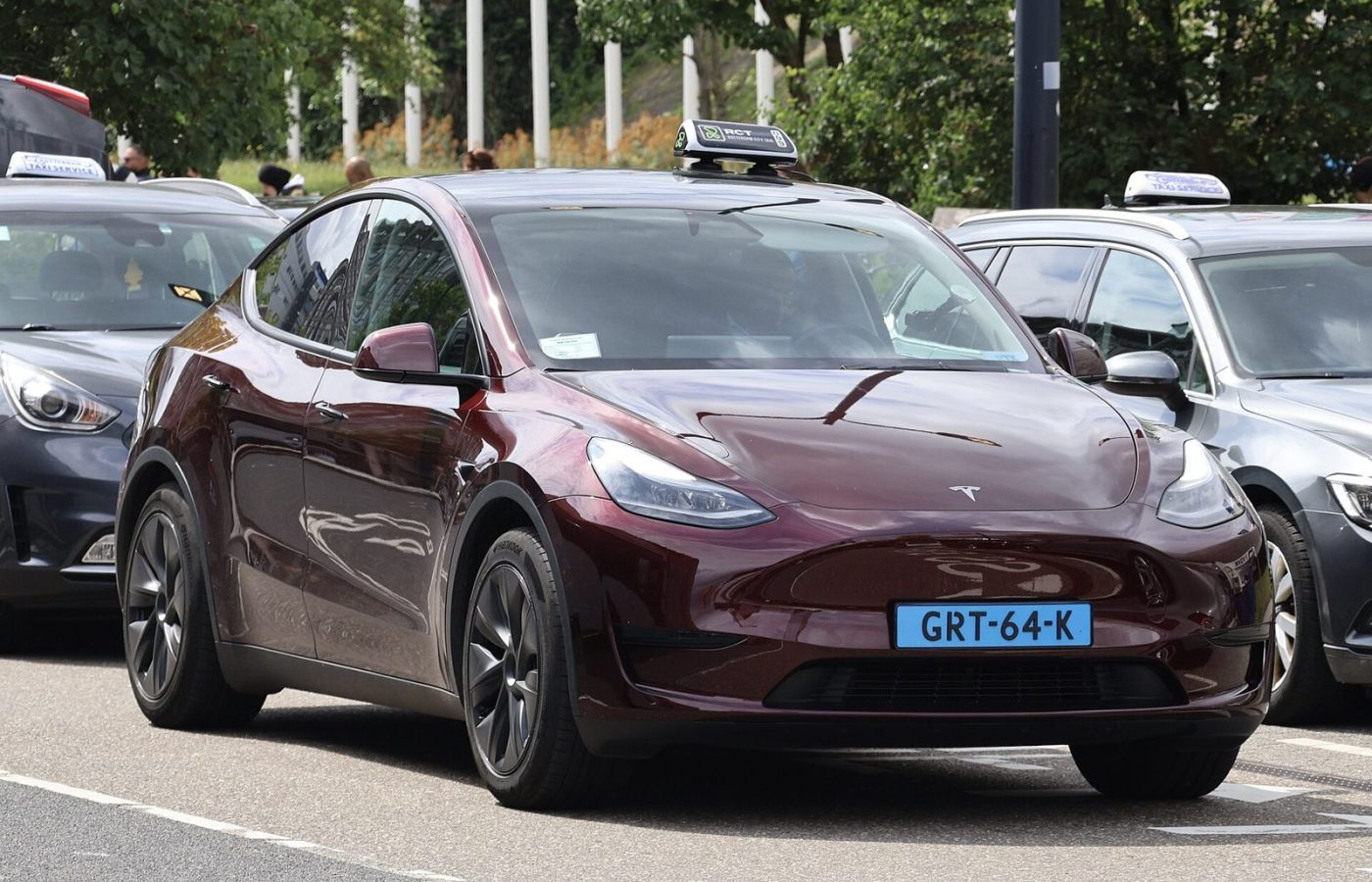
Featured image: Tesla Model Y taxi in Rotterdam, Netherlands. Photo: S5A-0043 via Wikimedia Commons (CC BY 4.0).
Sources
- RDW: RDW approves changes to Tesla driver assistance system (Nov. 3, 2026)
- Traficom: Tesla’s driver assistance system is now permitted on Finnish roads (Nov. 10, 2026)
- Government of Ontario: Speeding and aggressive driving
- Electrek: Tesla cuts FSD’s speed margin from 50% to 10% over the limit in Europe
- Tesla Mag: RDW approves a +10% speed offset cap
- Not a Tesla App: Tesla FSD Gets Reduced Speed Offset & More Changes in Europe