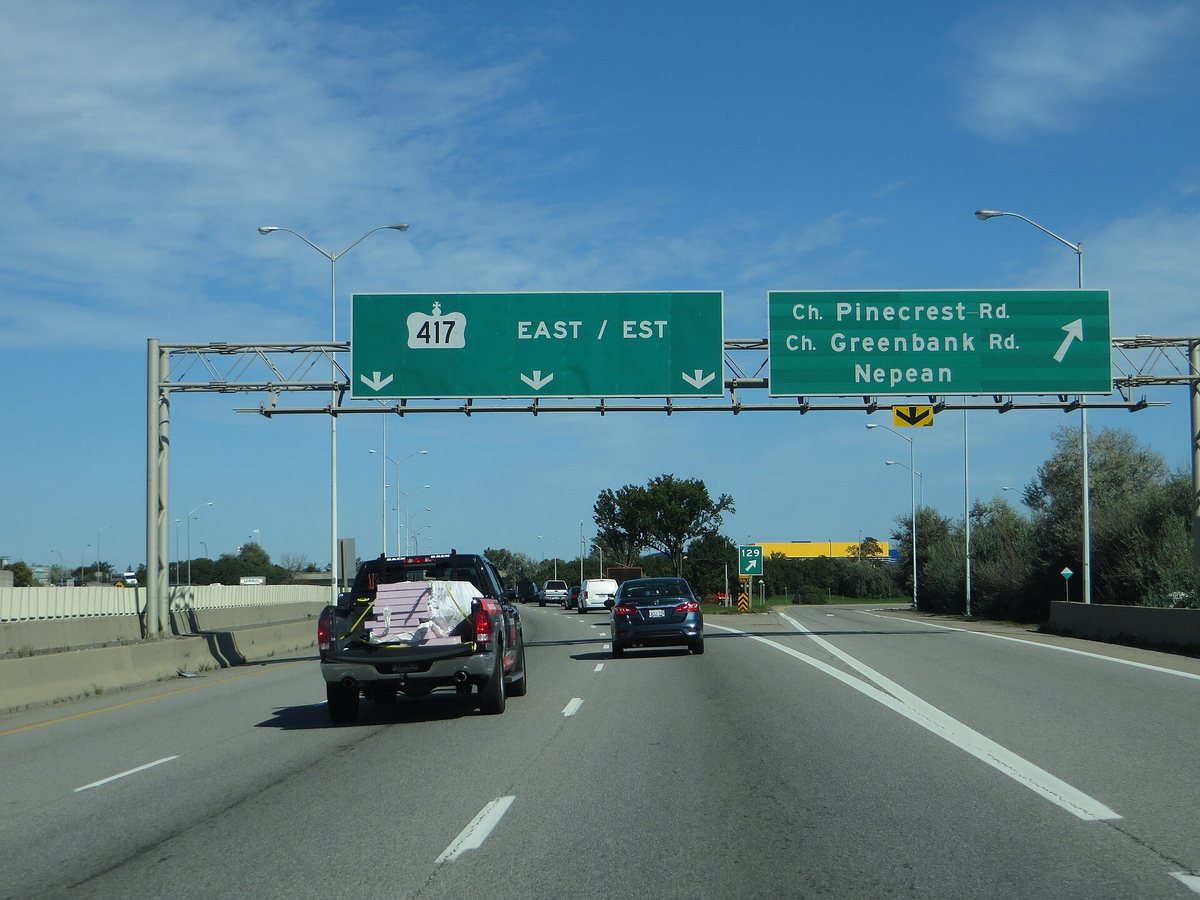
Ontario Provincial Police have charged a Tesla driver who was allegedly found asleep behind the wheel on Highway 417 in Ottawa during Tuesday’s rush hour. The driver now faces a careless driving charge, and police say it is the first time the Ottawa OPP detachment has charged someone for sleeping in a car running a self-driving feature.
It matters to every Tesla driver in Ontario, especially as more owners try FSD (Supervised) for the first time.
What happened on the 417
According to the OPP, an officer spotted the driver on Highway 417 on Tuesday, November 10. Const. Michael Fathi told CBC News the officer could see that the woman in the driver’s seat had her eyes closed and her hands off the steering wheel. Instead of using lights and sirens, the officer pulled in very close to record evidence on a body camera. Police believe that may have set off a proximity alert in the Tesla, which woke the driver, and she then pulled over.
The OPP didn’t name the driver-assistance system involved, but the photo police shared shows a newer-generation Model Y. In its public post, the OPP said: “Even though your vehicle has an autonomous driving feature, drivers are still required to pay due care and attention when behind the wheel.”
It wasn’t the only case that week. CityNews Ottawa reports that the day before, another driver on the 417 near Parkdale Avenue was charged with careless driving after an officer saw him watching videos on his phone while his car drove itself in traffic. Fathi told Global News police are seeing these cases more often, including one earlier this year involving a driver using a laptop at the wheel.
What a careless driving charge means in Ontario
Careless driving under Ontario’s Highway Traffic Act is not a minor ticket. If the driver pays it, the set penalty is a $490 fine and six demerit points. If the case goes to court and ends in a conviction, the law allows a fine of up to $2,000, up to six months in jail and a licence suspension of up to two years. A conviction like this can also follow you onto your insurance record.
The Ministry of Transportation’s guidance is plain: “The same driving laws apply to you when using driver assistance technologies.” It adds that you are responsible for any collisions, “not the advanced driver assistance systems features.”
Not the first in Canada
Electrek counts at least five times this year that Canadian police have gone public with a sleeping Tesla driver, most of them in British Columbia. B.C. Highway Patrol ticketed drivers allegedly asleep on Highway 1 in March and August, and Revelstoke RCMP followed up after a witness filmed a driver who appeared to be asleep near Golden in July. Back in 2020, Alberta RCMP went further and charged a Tesla driver with dangerous driving after finding him asleep on Autopilot at about 150 km/h.
Why this keeps happening
FSD now handles long highway stretches without a takeover, and that’s exactly when people relax too much. Researchers call it automation complacency.
Tesla relies mainly on the cabin camera above the rear-view mirror to check that you are watching the road, and it falls back to asking for a little pressure on the wheel when it can’t see you clearly. Electrek points out that Tesla’s own manual says the camera doesn’t need a full view of your eyes, and that the penalty for ignoring warnings is limited: five strikeouts suspend FSD for a week. In this case, the car was still driving when an officer pulled up beside it.
What it means for Canadian owners
FSD in Canada is a Level 2 system. Tesla sells it here as FSD (Supervised), and right now it is a C$99/month subscription. Supervised means exactly that. In the eyes of the OPP and the Highway Traffic Act, you are driving the car the whole time, whatever the screen says.
More first-time users are coming. Tesla just launched its FSD referral program in Canada, which gives other owners a free one-month trial, and new cars no longer come with Autosteer (here’s what that means). If you’re trying FSD for the first time, treat the first weeks as a learning period, not a nap.
Tired? Pull over. If the car warns you about drowsiness, or you notice your attention slipping, take the next exit and rest. FSD is not a backup driver. Winter makes this more important: early darkness, glare and slush all make long drives more tiring.
Phones count too. Watching videos with FSD engaged can lead to a careless driving charge, as the second Ottawa case shows. Ontario’s distracted driving rules still apply when driver assistance is on.
The bottom line
FSD can make highway driving in Ontario a lot less tiring, but it doesn’t change who is responsible. One sleeping driver on the 417 is now facing a $490 fine and six demerit points at the very least, and the OPP is clearly watching for it. How do you stay sharp on long drives with FSD on? Share your tips with 18.5K owners in Tesla Model Y & 3 [Ontario, Canada], and join the conversation in our X community Tesla Model* [Ontario, Canada].
Sources
- CBC News: Sleeping driver in self-driving vehicle woken up, stopped and charged in Ottawa
- Global News: Tesla driver found asleep on Highway 417 during Ottawa rush hour: OPP
- CityNews Ottawa: Two charged after sleeping, watching videos in autonomous vehicles
- Electrek: Police charge another Tesla driver caught asleep in rush hour as cases pile up
- Government of Ontario: Distracted driving