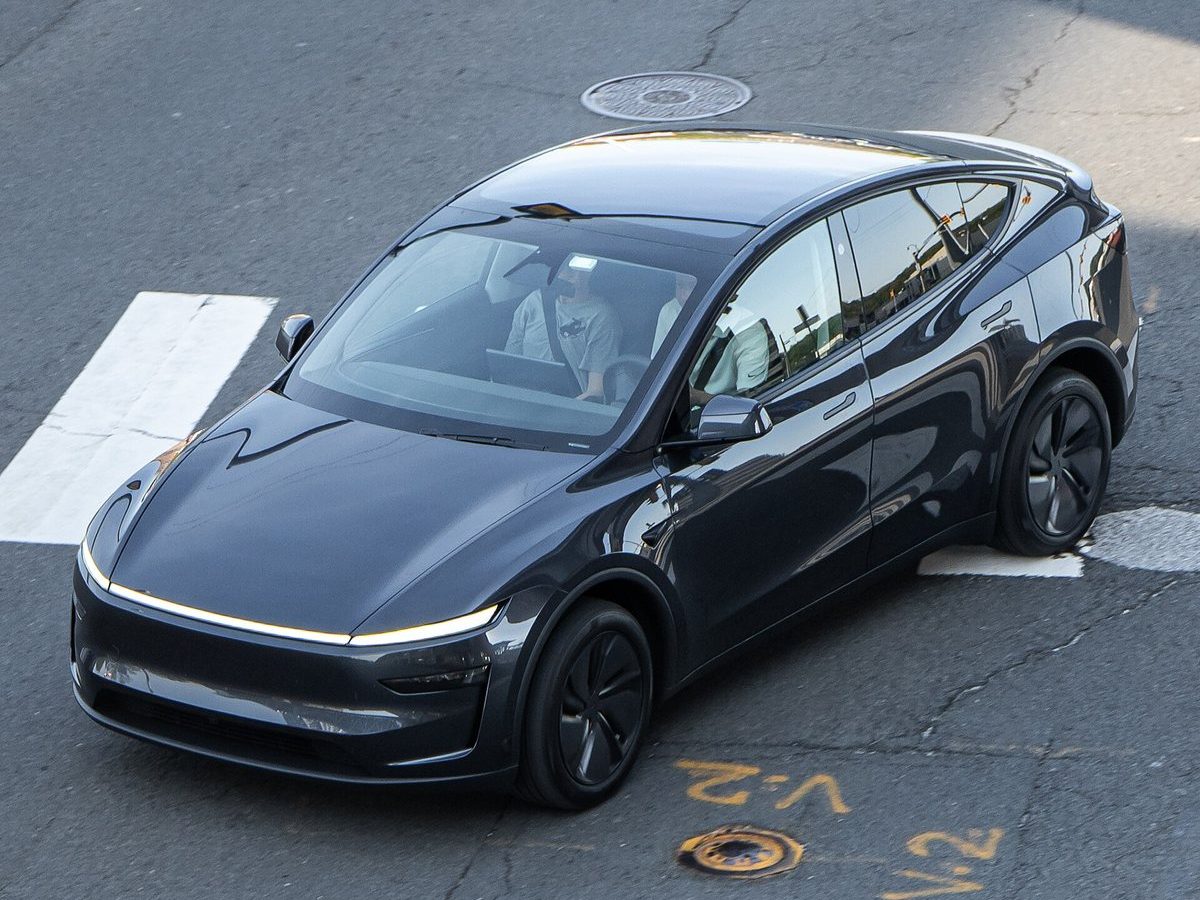
Tesla wants the rules for headlights to catch up with the way its cars actually light the road. In a public comment filed with the U.S. National Highway Traffic Safety Administration (NHTSA) on November 9, Tesla argued that the federal lighting standard was written for bulbs and two fixed beams, and that any rewrite has to account for camera-guided matrix LED headlights that can be improved over the air.
It’s a U.S. filing, and nothing changes on your car tomorrow. But the issue is familiar to Canadian owners: glare on dark two-lane highways, adaptive high beams, and a headlight recall still working its way through Canadian service centres.
What Tesla told NHTSA
On October 8, NHTSA published a notice in the Federal Register saying it plans to form a negotiated rulemaking advisory committee to help modernize Federal Motor Vehicle Safety Standard (FMVSS) No. 108, the U.S. rule for lamps, reflective devices and related equipment. Topics include glare, semiautomatic beam switching, headlamp aim and harmonization with international standards. Comments closed on November 9.
Tesla’s three-page letter, signed by Suraj Nagaraj, Tesla’s senior director of safety and homologation engineering, and posted to the public docket (NHTSA-2026-1981), makes two main points:
- Headlights are now software. Tesla says the standard “was written for an era in which a headlamp was a replaceable bulb in a housing, switched between two static beam patterns by the driver or a simple photocell.” Its matrix LED headlamps have individually addressable segments controlled in real time, take cues from the same surround cameras used for driving, and can be “refined over the air, within the certified performance envelope.” In Tesla’s words, adaptive beam functions are “scene-understanding problems, not binary light-threshold problems.”
- Automakers need more seats at the table. NHTSA proposed a committee of up to 18 members, with two seats for vehicle manufacturers and four for lighting manufacturers or retailers. Tesla says that mix “skews heavily” toward lighting suppliers, and it wants individual automakers to get at least the same share of seats.
This is a comment on a notice, not a petition for a new rule. NHTSA says it will consider the comments as it sets up the committee, and any recommendations would still have to go through a proposed rule and another round of public comment.
Where Canada fits
Canada has its own rulebook. Lighting on cars sold here must meet Technical Standards Document No. 108 under section 108 of the federal Motor Vehicle Safety Regulations, administered by Transport Canada. Tesla’s letter doesn’t mention Canada, and the NHTSA process doesn’t change Canadian requirements.
That said, Canadian lighting rules have historically tracked the U.S. standard closely, which is a big reason the same Tesla lighting features usually arrive on both sides of the border together. Adaptive Headlights are a good example: Tesla’s 2025.14 spring update brought the feature to Model 3 and Model Y vehicles with matrix headlights, including in Canada. Tesla’s release notes say high beams “adapt to reduce glare for other drivers and cyclists” by dimming individual pixels, so they can stay on more often at night. If U.S. rules move toward judging lighting as a whole system, it’s reasonable to watch whether Transport Canada follows (nothing has been announced).
The software side is already here
Tesla’s point about over-the-air lighting changes isn’t theoretical. Update 2026.38.5.12, the latest build rolling out to Canadian cars, includes Dynamic Headlight Leveling for specific Model 3 and Cybertruck vehicles. Tesla’s notes say the low beams “automatically adjust their aim based on driving conditions and nearby traffic to maximize your visibility while reducing glare.”
Lighting can also go the other way. Transport Canada recall 2026-401 covers 454 Model 3 (2018 to 2022) and Model Y (2020 to 2023) vehicles in Canada whose low beams may be too bright. We covered the update to that recall, in which Tesla will replace the headlights on affected cars. That fix is hardware, not software, which shows why the debate over what can and can’t be tuned over the air matters.
What it means for Canadian owners
For now, this is a regulatory story to keep an eye on rather than something to act on. But winter is the season when headlights matter most, so here’s what’s worth doing today:
- Check whether Adaptive Headlights is on. If your Model 3 or Model Y has matrix headlights, look under Controls > Lights > Adaptive Headlights. It helps most on unlit roads like Highway 7.
- Check your VIN for recall 2026-401 if you own an older Model 3 or Model Y, using Tesla’s VIN recall search or Transport Canada’s recall database.
- Keep the lenses clean. Road salt film and slush dim any headlight, matrix or not. A quick wipe at charging stops helps, as does keeping the windshield camera area clear.
- Stay on current software. Lighting improvements such as headlight leveling arrive through updates, so it pays to install them when they show up.
Tesla’s case is that headlights should be judged by how they perform on a real road at night. Canadian drivers, who do a lot of winter driving in the dark, have a stake in how that turns out.
Do the adaptive high beams work well on your drive home? Share your experience with 18.5K owners in Tesla Model Y & 3 [Ontario, Canada], where Ontario owners swap real-world tips every day. Come join us!
On X? Join our community Tesla Model* [Ontario, Canada] too.
Sources
- Regulations.gov: Comment from Tesla, Inc., docket NHTSA-2026-1981
- Federal Register: NHTSA notice of intent to establish a Negotiated Rulemaking Advisory Committee for Vehicle Lighting (Oct. 8, 2026)
- Justice Laws Website: Motor Vehicle Safety Regulations (C.R.C., c. 1038)
- Government of Canada: Transport Canada Recall 2026401, Tesla
- Not a Tesla App: 2026.38.5.12 release notes (Dynamic Headlight Leveling)
- Not a Tesla App: 2025.14 release notes (Adaptive Headlights)
- Drive Tesla Canada: Tesla backs NHTSA plan to modernize headlight rules for camera-based lighting
- TeslaNorth: Tesla wants U.S. headlight rules to catch up with its cars