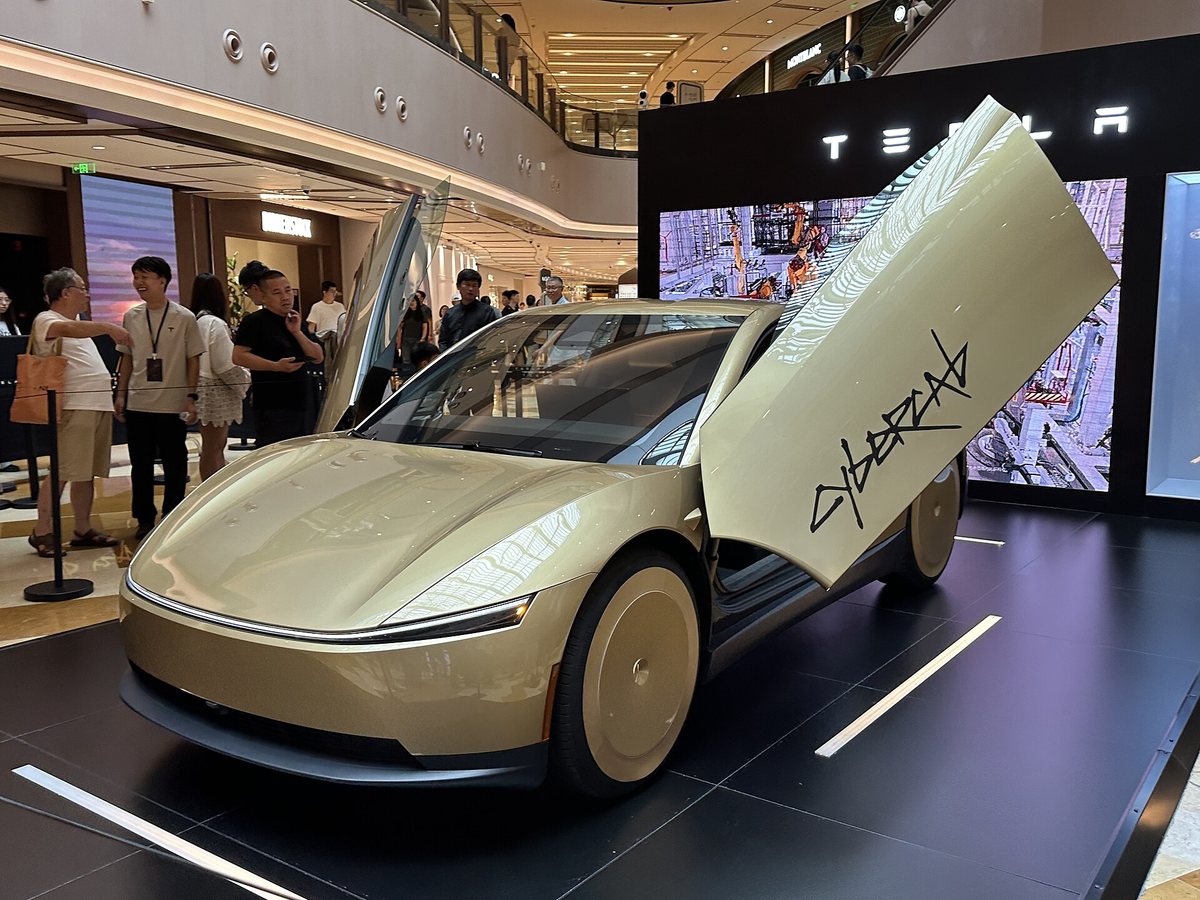
Tesla’s Cybercab has left Austin. On Thursday, November 19, Tesla opened public Cybercab rides in Dallas, making it the second city where riders can hail the two-seat robotaxi that has no steering wheel or pedals. The cars in Dallas are also a newer build, which Cybercab chief engineer Eric Earley has called “Cybercab V1.5.”
Here’s what launched, what’s different about the Dallas cars, and why a driverless Tesla service is still a long way from Canadian roads.
What launched in Dallas
Tesla’s Robotaxi account announced the launch with a short video and the line “Howdy Dallas.” Tesla also sent app notifications and emails to people in and around the service area, inviting them to “be one of the first to take a Cybercab ride in Dallas.” Riders book through the Tesla Robotaxi app, and some said they got the invitation before the Cybercab option appeared in their app, so access looks like a gradual rollout.
Dallas isn’t new territory for Tesla. It launched unsupervised Model Y robotaxi rides there in April and expanded the Dallas service area from 31 to 81 square miles in late August, covering more of downtown and reaching west toward Irving. The Cybercab now joins the Model Y fleet in that same zone. Because the Cybercab seats only two, groups of three or more still need a Model Y.
The launch was on schedule. Tesla said on its third-quarter earnings call in October that Cybercab rides would reach Dallas in November. Not a Tesla App reports that Tesla registered another 200 Cybercabs with the Texas DMV in the days before the launch. Tesla hasn’t said how many Cybercabs are operating in Dallas or published Dallas fares.
What’s new in Cybercab V1.5
Two hardware changes stand out so far:
- A built-in Starlink dish. The Dallas Cybercabs have a Starlink terminal integrated into the rear of the roof. When Tesla showed a Cybercab with an integrated dish in July, VP of AI Ashok Elluswamy said it would mainly serve as backup connectivity for navigation, customer service and fleet management, and that it “is still not required for safe operation of the vehicle.”
- A trunk camera. Riders found a camera in the rear trunk lid. Tesla hasn’t explained it, but the likely job is checking that passengers didn’t leave bags or groceries behind, something a human driver would normally notice.
Neither feature is brand new, but Dallas appears to be the first time both are in paid service. Tesla hasn’t said what else changed in V1.5. Musk has also said Tesla is working on a Cybercab with a smaller 40 kWh battery, which we covered when he first mentioned it.
What it means for Canadian owners
There’s no Robotaxi service in Canada, and Ontario’s rules explain why it isn’t simple. Ontario’s Automated Vehicle Pilot Program, which the province has extended to October 13, 2027, allows driverless testing of SAE Level 4 and 5 vehicles only under strict conditions. Approved participants must accept full liability, be able to monitor and stop the vehicle remotely, give police and municipalities a plan for how the car handles first responders and work zones, carry at least $5 million in liability insurance, and mark the vehicle as a driverless test vehicle. The program covers testing, not a paid ride service like Dallas.
A car without a steering wheel needs federal approval too. Ontario notes that testing a vehicle that doesn’t meet all federal Motor Vehicle Safety Act requirements needs an exemption from Transport Canada. A Cybercab has no wheel or pedals, so it would face that hurdle before it could even be tested here. Tesla hasn’t announced any plan to bring Cybercab or Robotaxi to Canada.
Personal Cybercab orders are U.S.-only. Tesla’s US$29,990 Cybercab, plus a US$299 monthly Autonomy subscription, is open to invited buyers in U.S. service areas, as we explained in Tesla Opens Cybercab Orders at US$29,990. Canadians can’t order one.
The pace is the real signal. Dallas went from unsupervised Model Ys to Cybercabs in about seven months, and Tesla now runs Robotaxi service in several Texas and Florida cities, which we tracked in our San Antonio expansion coverage. For Canadian owners, the software behind those cars is related to the FSD (Supervised) you can buy here today, but it still requires an attentive driver in Canada. Musk’s latest plans for a Model Y with no steering wheel point the same way: the U.S. gets driverless first, and Canada will need its own rules before any of it arrives.
Would you ride in a Cybercab if one showed up in Toronto, or do you want the steering wheel to stay? Share your take with 18.5K fellow owners in our Facebook group, Tesla Model Y & 3 [Ontario, Canada]. Come join us! You can also join our X community, Tesla Model* [Ontario, Canada].
Sources
- Not a Tesla App: Tesla Launches Cybercab Rides in Dallas With New V1.5 Design
- InsideEVs: The Tesla Cybercab Is Now Available in Dallas
- KRLD: Tesla’s Cybercab begins picking up passengers in Dallas
- Government of Ontario: Automated Vehicle Pilot Program
- Ontario e-Laws: O. Reg. 268/25, Pilot Project – Automated Vehicles